
5 Things Every Beginner Climber Should Know
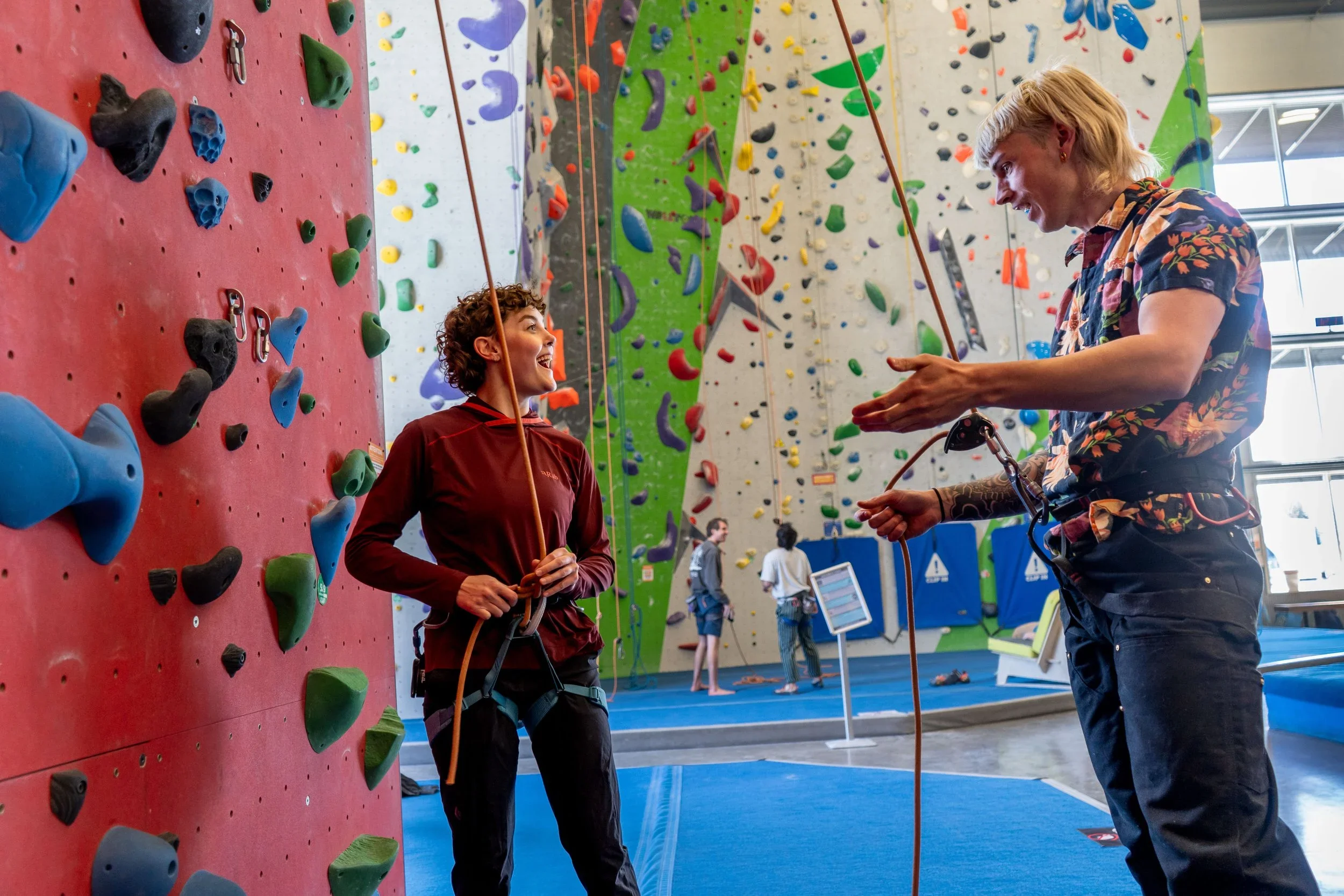
Picking up a new sport as an adult can be intimidating. The idea of yard-saling under the chair lift or tipping off your mountain bike trying to avoid a rock ledge is enough to make you want to stay indoors, reminiscing about childhood when you used to bounce off the ground after falling and didn’t care who saw you eat dirt.
Climbing has a reputation as one of these intimidating sports. But unlike skiing or mountain biking, most people learn to climb indoors at a climbing gym, making the process less intimidating. Plus, there’s someone there to show you the ropes (sorry). But even with the advantage of learning in a gym, there are plenty of misconceptions that can keep you hovering outside the door instead of stepping into a harness for the first time. Let’s clear a few up.
1) Climbing is a Full-Body Workout. Pull-ups Not Required.
One of the most common fitness myths about climbing is that it’s all upper body, and you need to look like The Hulk to climb hard grades. That is extremely untrue, and climbing requires far more lower-body engagement and core tension than most people realize. Your forearms will feel a serious burn, but that’s because forearm muscles work to stabilize grip strength in your hands, not because your forearms are actively hauling you up the wall.
Lastly, we cannot emphasize this enough: climbing is not a pull-up competition. When people hear you’re a climber and ask how many pull ups you can do, you can either lie and say “50 to 100 depending on the day,” or tell the truth and say “pull-ups can be helpful for locking off, but most of the time if you’re depending on pull-up strength to complete a route, you aren’t using the correct balance, footwork, core tension, and finger strength to actually climb the route correctly.” This response pulls double duty in giving an honest answer and turning the conversation to a new topic. Up to you.
2) You Don’t Need to Show Up With all the Gear
Actually, it’s better not to buy it piece by piece. There’s a lot to choose from, and everything from the harness to the shoes to the belay device has a dizzying array of options. If it’s your first time in the gym, grab a day pass and rent shoes and a harness before deciding if this is a sport you want to invest in.
If you do decide climbing’s for you and you’re ready to invest in your own setup, our Beginner Package math adds up in your favor. The kit includes climbing shoes, a harness, a chalk bag, and a chalk ball, plus an intro-to-climbing class where you’ll learn basic climbing techniques and training tips, and get your belay certification.
3) Yes, You Can Come in Alone…
Lead climbing and regular top roping might require a belay partner, but you don’t need a partner to boulder or use the autobelay. Solo climbing workouts are a great way to blow through energy via a quick bouldering or autobelay session, and once your forearms burn out, you can unroll your mat for a yoga class or finish your workout in the upstairs weight training area… none of which require a partner.
The hours are on your side as well. Climbing gym hours stretch far outside the standard workday, so you can stumble in half asleep at 6am, or head over at 9pm for a peaceful solo session after a long day. And if you’re one of those who land outside of the standard 9 to 5, might we recommend the lowkey 2pm time slot? Guarantee you’ll have your choice of route in the quiet midday gym.
4) … But You’ll Meet a Lot of People in the Gym
Apologies if you weren’t in the market for a new social group, but you’re going to find it at the climbing gym. Climbing is inherently a social sport. People chat about technique and strategy for tricky routes and problems, ask about gear preferences, or spot you on boulder problems or ask if you want to rope up when they see you on the autobelay.
It’s not uncommon to be resting on the mat between attempts and strike up a conversation with the person working on the same problem, discussing strategies for that weird foot chip or trying to guess the thought process behind the angle of the finish hold. Before you know it, you’re exchanging phone numbers, signing up for a technical climbing class, and planning a weekend trip to Ten Sleep. Don’t say we didn’t warn you.
5) People Who Are Scared of Heights Can Still Climb
Fear of heights is A) entirely normal and B) does not automatically disqualify you from climbing. One of the biggest mental hurdles for rope climbing is learning to trust your gear and your belayer. It takes time and practice to become accustomed to the feeling of being caught once you fall, and it doesn’t happen immediately. Plus, once you get over that fear, the feeling of climbing is exhilarating.
Even if your fear of heights can be paralyzing, rope climbing also isn’t the only form of climbing, and you can stay low to the ground while still advancing as a climber. Spire Climbing Center has thousands of square feet of rope-free boulder problems in difficulties ranging from pure beginner to absolute hardo. And if you don’t want to leap for a hold 20 feet off the ground, you can always choose problems that keep you closer to the ground until you get used to trusting the mats and cushioned landing system to safely break your fall. Finally, there’s always the option of a private lesson to get past a fear-of-heights mental block for climbers who want to advance their skills and start taking bigger falls.
Getting into a new sport can be overwhelming, but even if you’ve never tried climbing, there’s never a better time to start than now. We get brand new climbers in the gym every single day, and we’ll teach you everything you need to know to get started.
Written by Maggie Slepian